

When the person who shares your childhood memories also becomes a source of exhaustion, guilt, or manipulation, the wound runs deeper than most people can see. Navigating a relationship with a narcissistic sibling is uniquely disorienting because it’s rooted in the roles, rules, and expectations you absorbed in your family system. Many of these patterns grow out of complex narcissistic family dynamics that you may only later recognize as harmful, especially as you begin to understand structures like narcissistic family dynamics and roles.
You may have spent years trying to keep the peace, absorbing emotional blows, or questioning your own reality—particularly if your sibling used tactics similar to gaslighting and trust erosion. It’s often not just what they say or do that hurts; it’s how they twist your perception of events, convince you that you’re “too sensitive,” or insist that your memories are wrong.
If you’ve ever been told you’re overreacting, misremembering, or making everything about you, you may recognize patterns similar to those described in early signs of gaslighting. Over time, you might have learned to stay quiet, stay small, or stay available in order to avoid conflict. If you were consistently blamed or singled out, your experience may echo what it means to be the scapegoat in narcissistic family, where one sibling is unconsciously nominated to carry the family’s tension and blame.
This article is here to help you break that pattern. Setting boundaries with a narcissistic sibling can feel terrifying at first because it disrupts the unspoken contract you were forced into: the idea that their comfort matters more than your wellbeing. If you’ve spent years dismissing your own emotions, part of healing may involve learning to trust your emotions again, gently reclaiming your right to believe your inner experience.
You may also be carrying the impact of years of dismissal and minimization. Being told your feelings are wrong, exaggerated, or inconvenient leaves emotional marks that often resemble the wounds explored in healing after being emotionally invalidated. Naming what happened to you is not about blame—it’s about restoring your connection to your own truth.
In this article, you’ll explore how to recognize narcissistic traits in a sibling, why boundary-setting feels especially painful in family systems, and how to create limits that protect your peace without getting pulled as deeply into manipulation. You’ll also find guidance on what to do when your sibling escalates, guilt-trips, or recruits other relatives into the conflict.
Most of all, you’ll be reminded of something you may not have heard enough: your need for emotional safety is valid. You are not cruel for setting boundaries. You are not selfish for stepping back. You are not wrong for choosing yourself.
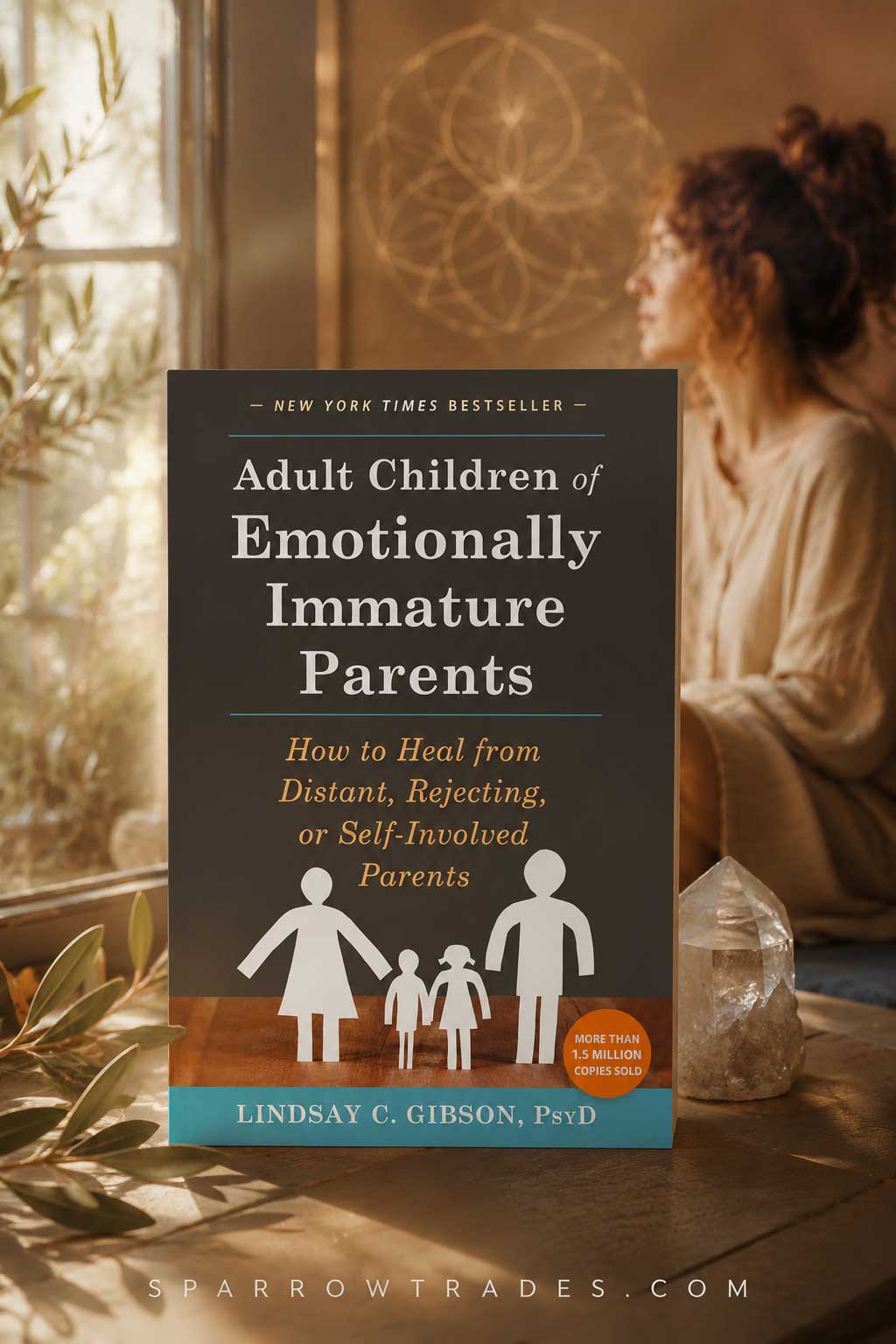
Understanding Narcissistic Traits in a Sibling
Growing up with a narcissistic sibling often means you learned to shrink so they could shine. You may have become the responsible one, the quiet one, the fixer, or the emotional sponge—while your sibling took up most of the space in the room. Sometimes they were overtly favored or protected, in ways that mirror the dynamics described in golden child and scapegoat roles in adulthood, where one sibling is idealized while the other is blamed or overlooked.
Narcissistic traits in a sibling don’t always show up as obvious vanity or arrogance. More often, they look like:
- A constant need to outdo you—even over small things
- Rewriting family stories so they always look like the hero or the victim
- Taking credit for your achievements or minimizing your effort
- Explosive anger or icy withdrawal when confronted
- Using guilt, shame, or intimidation to get their way
- Acting entitled to your time, attention, or emotional labor
Over time, these behaviors can leave you doubting your own perception. When you bring up something hurtful, they may deny it happened, blame you, or accuse you of being dramatic. These patterns echo the emotional distortion discussed in recognizing emotional manipulation and gaslighting in relationships, where conversations become less about understanding and more about control.
If you frequently felt like the “problem child” or the one who was always “too much” or “too sensitive,” you may find resonance with the experiences described in signs you were the scapegoat. Many adults only later realize that what they thought was normal sibling rivalry was actually a long-term survival role formed within a dysfunctional system.
Understanding your sibling’s patterns is not about diagnosing them; it’s about stepping out of confusion. When you can name what’s happening, you can stop internalizing their behavior as a reflection of your worth and begin to see it as a reflection of their unhealed wounds and defenses.

Why Setting Boundaries With a Narcissistic Sibling Feels So Painful
If setting boundaries with your sibling feels excruciating, you’re not failing—you’re uncovering how deeply your childhood roles were wired into you. In many families with narcissistic dynamics, one sibling is encouraged to take up emotional space, while others are quietly expected to accommodate, soothe, or stay small. Exploring the aftermath of these patterns, as in healing sibling relationships after family trauma, can help you understand why saying “no” now feels like a betrayal of the entire system.
You might feel guilty for pulling back, worried about being labeled selfish, or terrified that you’re “breaking up the family.” You may be haunted by questions like: “What if I’m overreacting?” or “What if I’m the problem?” These doubts are common in survivors of family trauma, especially when they’ve spent years trying to earn love or safety by being accommodating.
When you begin to set boundaries, your sibling may respond with anger, denial, or guilt-tripping. They may recruit other family members to pressure you back into your old role, making it even harder to hold your ground. For some people, this process overlaps with efforts described in rebuilding sibling trust after family trauma, where healing requires both new boundaries and a redefinition of what trust can realistically look like.
Setting boundaries is especially painful when you’re grieving the sibling relationship you wish you had. If you’ve longed for a close, supportive bond, it may be heartbreaking to accept that your sibling cannot meet you there right now. This can be particularly tender in sister dynamics, echoed in themes like healing the sister wound in narcissistic families, where gendered expectations and emotional labor add extra layers of complexity.
At the same time, boundaries are what allow you to step out of survival mode. Learning how to set emotional boundaries without feeling guilty becomes a key part of reclaiming your autonomy. Over time, what once felt like betrayal begins to feel like self-respect.
Types of Boundaries That Actually Work With a Narcissistic Sibling
Narcissistic siblings rarely respond to subtle hints or half-spoken limits. They tend to test, push, and twist boundaries, especially if they’re used to having emotional power over you. That’s why your boundaries need to be clear, consistent, and backed by action.
Effective boundaries are:
- Direct – no hidden messages or vague language
- Calm – stated without drama, even if you feel upset inside
- Concrete – specific and observable (“If you yell, I’ll hang up”)
- Consistent – enforced the same way each time
Communication boundaries might sound like: “I’m ending this call now,” or “I won’t continue this conversation if you insult me.” These limits are grounded in the principle that respect must be mutual, which connects with the deeper exploration of understanding emotional boundaries and the psychology of respect.
Access boundaries involve limiting how, when, and where your sibling has contact with you. That may mean fewer visits, shorter calls, or avoiding certain topics that consistently become harmful. Emotional boundaries can sound like: “I’m not willing to be the mediator anymore,” or “I won’t explain myself again.”
Social boundaries are about staying out of triangulation and drama. You might decide not to participate in conversations where your sibling attacks another family member—or where you are the one being attacked.
Finally, there are consequence boundaries: what you will do when your boundary is ignored. For example: “If you begin yelling, I will hang up,” or “If you keep bringing up that topic, I’ll need to step away for a while.” For some people, this eventually extends into distance or low-contact strategies, the kind of work that will be supported further in future guides like low-contact guide for narcissistic family members.
As you practice, you may notice yourself wanting more concrete tools and phrasing. That’s where a resource like scripts for setting boundaries with a narcissistic sibling can someday offer direct examples of what to say—and what to do—when conversations become difficult.
Remember: your sibling never has to like your boundaries for them to be valid. The point is not to control their response, but to take responsibility for how you allow yourself to be treated.
Frequently Asked Questions About Setting Boundaries With a Narcissistic Sibling
Boundary-setting with a narcissistic sibling can stir up confusion, guilt, fear, and grief. You are not alone in this. Many people raised in complex family systems are doing the same work—untangling old roles, processing invalidation, and slowly repairing their sense of self. This deeper inner work is often supported by tools like emotional self trust tracker, which focus on rebuilding your ability to trust your own feelings and choices.
How do I set boundaries without causing more conflict?
With a narcissistic sibling, your goal isn’t to avoid all conflict—because any limit you set may feel threatening to them. Instead, your goal is to minimize emotional harm to yourself. You can do this by keeping your boundaries short, neutral, and steady. For example, “I’m not available to talk about this right now,” or “I’m going to end this call.”
It’s normal to hope that if you word things perfectly, they won’t react badly. But in reality, their discomfort often has less to do with your wording and more to do with losing control. As you keep your responses calm and consistent, your nervous system gradually learns that standing up for yourself is possible—and survivable—even if they don’t like it.
What if my sibling tries to guilt-trip me after I set a boundary?
Guilt-tripping is extremely common. They might say you’re ungrateful, dramatic, or “tearing the family apart.” These are not reflections of your character; they are strategies to pull you back into old patterns. When this happens, it can help to pause, breathe, and remind yourself of the emotional cost of continuing to give in, especially if you’ve already noticed patterns of burnout similar to those described in when empathy becomes emotional exhaustion.
Instead of defending yourself, you can repeat your boundary: “I understand you’re upset, but my decision stands.” The less emotional energy you feed into the guilt-trip, the sooner it loses its power.
Is it normal to feel guilty when setting boundaries?
Yes. If you grew up in a family where your role was to keep the peace, fix problems, or absorb blame, saying “no” can feel almost physically wrong at first. Guilt is often a sign that you’re doing something new, not something bad. Over time, as you continue to honor your limits, guilt tends to soften into relief and clarity.
One way to work with guilt is to ask: “Who benefits when I feel this way?” In many cases, guilt keeps the old system intact at your expense. As you practice sitting with that discomfort, you teach yourself that your needs are allowed to exist—even if others disagree.
Should I give my sibling another chance if they promise to change?
Promises to change can be tempting, especially if you still hope for a closer relationship. But lasting change isn’t measured in apologies; it’s measured in consistent behavior over time. Before relaxing your boundaries, you might ask: Are they taking responsibility without blaming others? Do they respect your limits when you state them?
If the answer is no, it may be safer to hold your boundaries steady. Future resources like rebuilding emotional trust after sibling conflict will be able to offer more guidance on what real trust repair looks like—and how to protect yourself when that repair isn’t truly happening.
What if other family members say I’m being unfair or too harsh?
In systems shaped by narcissistic dynamics, the person who changes the pattern is often seen as the problem. When you set boundaries, other relatives might pressure you to go back to your old role, accusing you of being harsh or divisive. Their discomfort does not mean your boundaries are wrong; it often means that your limits disrupt a familiar but unhealthy status quo.
It can help to remember that people who benefited from your lack of boundaries may feel threatened by your new limits. Their discomfort does not mean you’re doing something wrong. You’re allowed to protect your wellbeing, even if others don’t understand—especially as you continue your own broader healing work around family dynamics and blame, explored further in healing after family blame and projection.
When is going no-contact a healthy choice?
No-contact is often a last resort, but that doesn’t make it extreme or unreasonable. It can be a deeply healthy choice when your sibling repeatedly violates boundaries, uses verbal or emotional abuse, spreads lies, or consistently makes you feel unsafe and depleted. In such cases, distance may be the only way to truly protect your mental and emotional health.
Deciding to go no-contact is intensely personal and can bring up grief as well as relief. You don’t have to rush that choice, and you don’t have to justify it to people who refuse to see the full picture. Your safety matters more than their approval. Future guides like low-contact guide for narcissistic family members will be able to offer more structured support for this process.
Conclusion — Reclaiming Your Peace, One Boundary at a Time
Setting boundaries with a narcissistic sibling is not a single conversation; it is an ongoing practice of choosing yourself, again and again. If you were taught that love means self-sacrifice or silence, asserting your needs may feel unfamiliar, even frightening. That’s why anchoring yourself in an inner framework of care, like the one explored in emotional wellness foundations, can be so powerful. It reminds you that your wellbeing is not optional—it is the foundation of everything else in your life.
As you keep honoring your limits, you may notice subtle shifts: less anxiety before seeing your sibling, more confidence during conversations, and more energy left over for the relationships that are mutual and nourishing. Grounding practices can be especially helpful during this time. Simple rituals like those in 5 minute grounding rituals can help your nervous system feel safer as you do this hard, brave work.
You may also find that setting boundaries brings old wounds to the surface—memories of being blamed, shamed, or dismissed when you tried to speak up. Exploring themes similar to those in healing after family blame and projection can help you process these experiences and recognize that the burdens you carried were never yours to begin with.
Your sibling may never fully understand or honor your boundaries. They may continue to push, test, or criticize. But the success of your healing doesn’t depend on their growth—it depends on your commitment to your own. As you deepen your inner awareness, resources like the power of self awareness in emotional healing can support you in staying connected to who you are beyond the roles your family assigned you.
Every time you say “no” to manipulation, you are saying “yes” to your peace. Every time you choose distance over chaos, you are choosing a future where you are no longer defined by someone else’s behavior. Your boundaries are not a rejection of love; they are an affirmation that any relationship you participate in—including with your sibling—must include respect.
You are not abandoning your family. You are returning to yourself. And that is one of the most courageous things you can do.


Where softness, self-awareness, and emotional healing are allowed to coexist. Through reflective writing, grounding rituals, and intentional beauty, Sparrow Trades offers gentle support for sensitive souls learning to reconnect with themselves.