
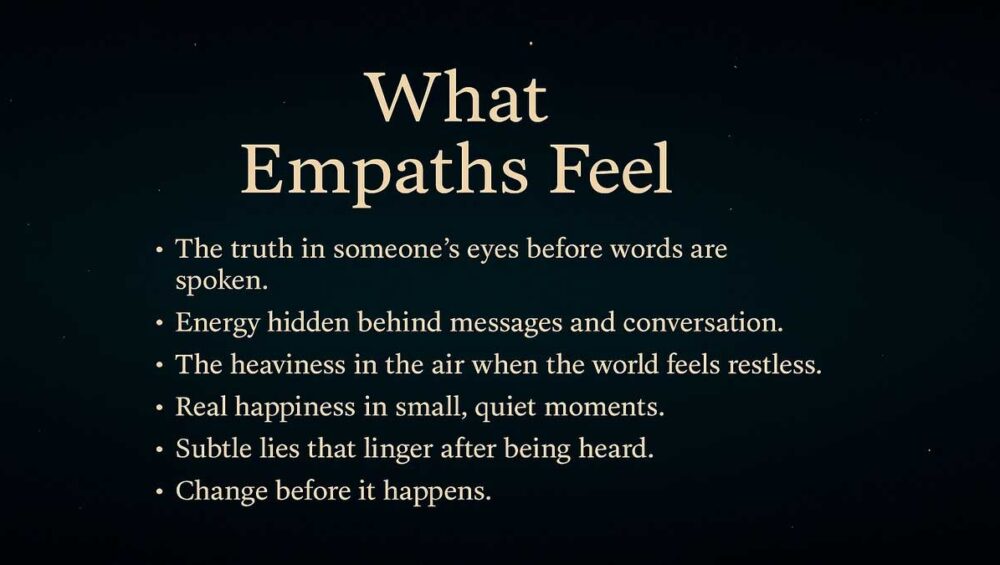
Empaths don’t simply perceive the world — they feel it. Their inner landscape is shaped not only by their own emotions but also by the subtle currents, hidden truths, and unspoken heaviness that drift beneath everyday interactions. Some empaths first recognize their sensitivity when they read an article describing what an empath truly is and realize, perhaps for the first time, that their deep emotional resonance has a name.
If you’ve ever felt emotionally heavier after listening to someone else’s story… sensed dishonesty before anyone else… or felt overwhelmed by crowds—the experience of emotional absorption may feel familiar. Many empaths eventually reach a point of emotional fatigue, explored more deeply in When Empathy Becomes Emotional Exhaustion. This article is devoted entirely to what empaths feel—the inner, sensory, emotional world that defines their daily life.
What Empaths Feel in Their Bodies
Empaths often experience emotions physically, as though their bodies are instruments tuned to subtle shifts in the environment.
1. Tightening or Softening in the Chest
The body often reacts before the mind. A friend may say they’re fine—but an empath feels heaviness instantly. This sensation connects deeply with emotional boundaries and respect.
2. Sudden Energy Surges or Fatigue
Empaths often feel uplifted by joyful people and drained by anxious ones. Understanding what grounding is helps empaths regulate these physical fluctuations.
3. The Weight of Unspoken Stories
Empaths may carry emotional residue after conversations. Supportive tools such as 5-minute grounding rituals and grounding with air and breath can help release accumulated emotional weight.
4. Sensory Intensity
Crowds, loud spaces, conflict, or overstimulation affect empaths quickly due to heightened nervous-system sensitivity.
What Empaths Feel Emotionally
1. The Truth Behind the Eyes
Empaths sense emotional truth. When others suppress their feelings, empaths still feel the undercurrent—often leading to experiences similar to those described in Healing After Being Emotionally Invalidated.
2. Hidden Energy in Messages & Conversation
An empath reads the emotion between the lines—a pause in a text, a shift in tone. This emotional awareness is strengthened through learning to trust your emotions again.
3. Quiet Joy in Soft Moments
Empaths feel joy deeply—sunlight, quiet rooms, gentle affection. Practices like daily self-care rituals help protect this sensitivity.
4. Sensitivity to Dishonesty
A lie feels like friction to an empath—energetically and emotionally.
What Empaths Feel Energetically
1. The Heaviness When the World Feels Restless
Empaths feel collective anxiety like weather changes. Their sensitivity is often mislabeled as “too sensitive,” a topic explored in Being Called Sensitive Is Manipulation.
2. Change Before It Happens
Empaths sense relationship shifts or emotional storms before others notice. This intuitive awareness is supported by mindfulness for anxiety.
3. Emotional Atmospheres
Empaths feel the vibe of a room instantly—warmth, tension, chaos, safety. Many find balance through nature-based practices such as those in the nature therapy guide.
4. Resonance & Dissonance
Some people feel grounding; others feel draining. Understanding this requires deep inner awareness, explored further in The Power of Self-Awareness in Emotional Healing.
Frequently Asked Questions About Empath Sensitivity
What do empaths feel that others usually don’t?
Empaths feel emotional subtext—sadness beneath a smile, tension behind silence, or atmospheric heaviness. Tools like the emotional self-trust tracker help empaths distinguish their own emotions from those they absorb.
Why do empaths get overwhelmed so easily?
Empaths process their own emotions and others’ emotions simultaneously. Practices from mindfulness for beginners can help regulate this emotional flow.
Do empaths absorb other people’s emotions?
Yes—often unconsciously. Without grounding and emotional boundaries, an empath may carry feelings that are not theirs.
How can empaths tell when a feeling isn’t theirs?
When an emotion appears suddenly or feels disconnected from context, it’s often external. Releasing these emotions becomes easier through 5-minute grounding rituals.
Why do empaths need so much alone time?
Solitude helps an empath reset their nervous system, release absorbed emotions, and reconnect with their internal voice. Nature-based practices in the nature therapy guide are especially helpful.
Conclusion
To be an empath is to move through life with emotional depth and heightened awareness. While others experience the surface, empaths feel the layers—spoken and unspoken. This sensitivity is a profound gift, but it requires boundaries, rest, grounding, and self-awareness. When honored, an empath’s intuition becomes wisdom, their sensitivity becomes strength, and their emotional resonance becomes clarity.

Where softness, self-awareness, and emotional healing are allowed to coexist. Through reflective writing, grounding rituals, and intentional beauty, Sparrow Trades offers gentle support for sensitive souls learning to reconnect with themselves.