Amethyst has always been more than just a beautiful purple gemstone. From ancient legends about gods and royalty to its place in modern jewelry and crystal healing, amethyst carries a story that weaves together history, science, and spirituality. When we ask “what is amethyst?” the answer spans not only its geological formation but also the deep emotional and symbolic connections people have held with this stone for centuries.
At its simplest, amethyst is a violet variety of quartz, colored by iron impurities and natural irradiation deep within the Earth. With a hardness of 7 on the Mohs scale, it is durable enough for everyday wear, making it a favorite in both fine and artisanal jewelry. But beyond its physical nature, amethyst has earned a reputation as a stone of protection, wisdom, and peace.
Legends tell us that the ancient Greeks believed amethyst could prevent intoxication. Royalty and clergy across Europe wore it as a sign of divine connection and clarity. Egyptian amulets carved from amethyst were carried for protection, while Chinese traditions held it as a stone of balance and inner wisdom. In every culture, the allure of amethyst lies in its promise of serenity and strength.
Today, amethyst continues to be cherished both as a healing crystal and as a timeless jewelry gemstone. It bridges the gap between science and spirit, offering a connection to the Earth while enhancing human expression. Whether in raw geodes, polished pendants, or carefully faceted rings, amethyst represents more than beauty — it symbolizes a journey of balance, healing, and self-expression. For a broader view of how amethyst fits into wellness practices, crystal healing guide.
Amethyst Meaning and Cultural Significance
Throughout history, amethyst has symbolized purity, balance, and spiritual clarity. Its very name comes from the Greek amethystos, meaning “not intoxicated.” The story of Dionysus and the maiden Amethystos reminds us that the stone has long been tied to themes of moderation and transformation.
In medieval Europe, bishops often wore amethyst rings, not only for their beauty but as a mark of devotion and a guard against temptation. In Egyptian culture, amethyst was carved into amulets to provide protection during both life and death. In Asian traditions, it was considered a scholar’s stone — enhancing wisdom and supporting focus.
Across these cultures, amethyst emerged as a gem of sobriety, spirituality, and protection, qualities still associated with it today. In modern crystal healing, its enduring symbolism is often explored through its amethyst crystal meaning, especially as it relates to personal transformation and balance. You can also see its role alongside other stones in our chakra crystals guide.
The Unique Properties of Amethyst
Amethyst’s beauty lies in its spectrum of purples, ranging from delicate lavender to the deepest violet. The most prized stones — sometimes called “Siberian quality” — display a rich purple hue with flashes of red and blue. These shades are created by trace amounts of iron and exposure to natural radiation within the Earth.
Scientifically, amethyst is fascinating not only for its color but also for its piezoelectric properties — meaning it can generate electricity when subjected to pressure. This quality has made quartz crystals, including amethyst, useful in modern technology like watches and sensors. For collectors interested in the broader effects crystals are believed to have, see our overview on the benefits of healing crystals.
For wearers and collectors, amethyst is valued for its durability. With a Mohs hardness of 7, it resists scratches better than softer stones, yet still requires mindful care to avoid fading or damage. This balance of resilience and delicacy mirrors its symbolic reputation: strong yet calming, protective yet gentle.
Amethyst in Jewelry and Everyday Life
Amethyst has always been a jewel of the people, accessible yet luxurious. Its versatility allows it to shine in every form — from raw bohemian-style pendants to elegant cocktail rings set in gold.
- Amethyst Necklaces: Long associated with spirituality, these pieces sit close to the heart and throat, amplifying self-expression. Browse our amethyst necklaces to see how this stone transforms into wearable meaning.
- Amethyst Bracelets: Worn on the wrist, amethyst bracelets become a daily reminder of balance and healing. Explore amethyst bracelets designed for both beauty and intention.
Beyond jewelry, amethyst decor adds natural elegance to spaces. Amethyst geodes, clusters, and polished points are often placed in homes to promote calm energy. Their rich colors naturally draw the eye, turning each piece into both an art object and a symbolic anchor.
Amethyst is often chosen as a gift of meaning as much as beauty. Many people also choose amethyst jewelry with intention, pairing personal style with a deeper spiritual purpose. If you’re exploring how amethyst fits into your daily wellness, see our guide to crystals for meditation, where amethyst is often recommended for calming the mind and deepening focus.
Varieties of Amethyst
Not all amethyst looks the same, and each variety has its own charm:
- Siberian Amethyst: Deep, saturated purple with hints of red and blue flashes; the most prized for fine jewelry.
- Rose de France: Soft lavender shades, often used in feminine and vintage-inspired designs.
- Chevron Amethyst: Recognizable by its V-shaped white quartz banding, often used in healing practices for its unique patterns.
For those drawn to the energetic side of amethyst, the amethyst healing guide dives deeper into its emotional and spiritual uses.
How to Care for Amethyst
Caring for amethyst is simple but essential if you want to preserve its color and energy:
- Avoid Sunlight: Prolonged exposure can cause fading.
- Clean Gently: Use mild soap and lukewarm water, avoiding harsh chemicals or ultrasonic cleaners.
- Store Carefully: Keep jewelry in a soft pouch or lined box to avoid scratches.
By treating your amethyst with care, you allow its brilliance — both physical and symbolic — to endure.
The Science of Amethyst Formation
Amethyst forms when silica-rich fluids cool and crystallize within cavities in volcanic rocks. Over time, trace amounts of iron and exposure to natural radiation transform ordinary quartz into shades of purple.
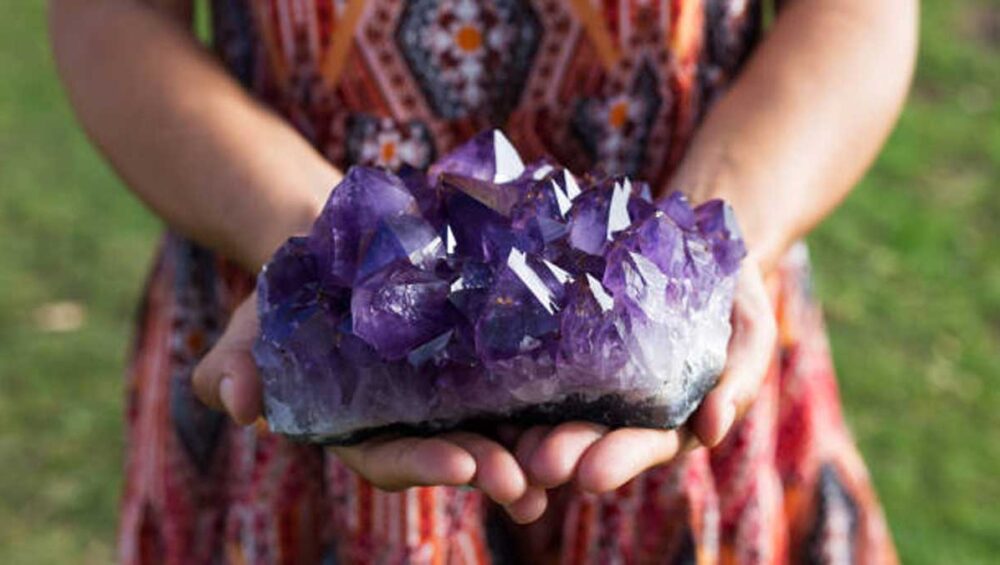
Famous deposits are found in Brazil, Uruguay, Zambia, and Russia. Each region produces crystals with distinctive qualities, from the deep violets of South America to the lighter hues of African stones. Amethyst geodes, in particular, capture the imagination: hollow volcanic bubbles lined with thousands of sparkling crystals, hidden underground until revealed.
Synthetic amethyst is also produced in labs, offering affordable options for jewelry, though collectors often seek the natural stone for its uniqueness. Understanding its origins adds depth to our appreciation of this remarkable gem. To see how amethyst connects with energy work more broadly, visit our chakra crystal healing resource.
Frequently Asked Questions About Amethyst
Below are answers to common questions that help clarify how to choose, wear, and care for amethyst.
Is amethyst rare?
Amethyst was once considered as precious as rubies and emeralds until vast deposits were discovered in Brazil in the 18th century. Today, it is abundant and accessible, though high-quality deep purple stones remain prized.
Is amethyst a birthstone?
Yes. Amethyst is the traditional February birthstone, symbolizing peace, clarity, and devotion. It’s also linked to the 6th and 17th wedding anniversaries.
Does amethyst fade in sunlight?
Yes. Prolonged exposure to direct sunlight can cause its color to lighten. Store jewelry in a soft case and display crystals away from strong UV light.
Is amethyst good for meditation?
Many people use amethyst during meditation for its calming and focusing qualities. It’s closely tied to the third eye and crown chakras.
What’s the difference between natural and lab-grown amethyst?
Lab-grown amethyst shares the same chemical composition and appearance as natural amethyst. The difference lies in origin: natural stones are mined, while synthetics are grown in controlled environments. Both are beautiful, though collectors often prefer natural crystals.
What are the benefits of amethyst?
Traditionally, amethyst is said to encourage tranquility, clarity, and protection. While these qualities are rooted in cultural lore rather than science, many people find amethyst meaningful in their personal journey.
Conclusion: Embracing the Beauty and Meaning of Amethyst
So, what is amethyst? It is quartz transformed by Earth’s forces into shades of purple that inspire awe and imagination. It is a stone steeped in history, believed to protect, guide, and calm. It is a gemstone that moves easily between the sacred and the stylish, appearing in both crystal altars and elegant rings.
For jewelry lovers, amethyst is a versatile choice that pairs beautifully with gold, silver, and contemporary designs. For seekers of meaning, it is a crystal that speaks to intuition, balance, and inner peace. And for anyone who simply loves beauty, amethyst delivers timeless allure.
As you explore your own journey with amethyst, whether through a necklace, a crystal cluster, or simply a moment of admiration, let it remind you of both the Earth’s creative power and your own capacity for clarity and calm.

Where softness, self-awareness, and emotional healing are allowed to coexist. Through reflective writing, grounding rituals, and intentional beauty, Sparrow Trades offers gentle support for sensitive souls learning to reconnect with themselves.