There’s a certain stillness that takes hold when you hold lapis lazuli in your hand. The kind that echoes across continents, whispers through ancient tombs, and hums beneath the surface of forgotten mountains. Lapis lazuli is not just a stone—it is a relic of fire, pressure, and patience.
So how is lapis lazuli formed? The answer lies in the alchemy of earth and time.
The Alchemy Beneath: How It All Begins
Lapis lazuli begins its transformation far beneath the surface of the Earth, nestled within ancient limestone beds. It is born from a process called contact metamorphism—a dramatic meeting of molten magma and pre-existing limestone. When the Earth shifts, heats, and compresses, the result is magic: a solid symphony of minerals slowly morphs into something mesmerizing.
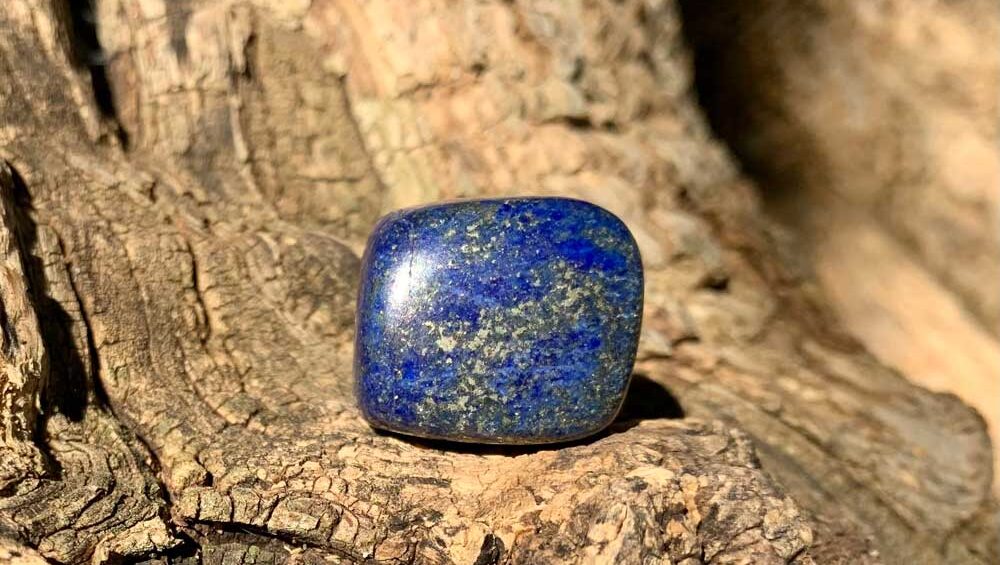
The heart of this gemstone is lazurite, the blue soul of lapis lazuli. But this celestial blue doesn’t emerge alone. It shares space with golden pyrite, creamy-white calcite, and traces of sodalite and hauyne—each mineral forming a part of the gem’s unique visual story.
A Mineral Tapestry: What Makes Up Lapis Lazuli
Each piece of lapis lazuli is a mosaic of earth’s raw poetry:
Lazurite: The defining blue pigment, rich in sodium and sulfur.
Pyrite: Those glittering golden sparks that dance across its surface.
Calcite: Often visible as white veins or patches, adding softness and contrast.
Sodalite, Hauyne, Diopside: These contribute to lapis’s secondary hues and density.
No two stones are identical—each one holds a fingerprint of the planet’s turbulent creativity.
From Afghanistan to Chile: Where the Blue Is Born
The most legendary lapis lazuli comes from the Sar-i Sang mines of Afghanistan, where miners have extracted the stone for over 6,000 years. This region gave rise to the lapis of pharaohs and painters, of temples and trade routes.
Other deposits are found in:
Chile: Producing a softer blue with more calcite, often known as “Capri blue.”
Russia: Particularly near Lake Baikal, known for its deep, purer blue.
Italy, Myanmar, and the USA: Each with small but distinctive deposits.
The geography of lapis lazuli is as dramatic and storied as its hue.
Extraction: From Earth’s Veins to Human Hands
Mining lapis lazuli is no easy feat. In Afghanistan, miners still use traditional tools, carving into mountainsides by hand to reach the coveted veins. This process honors centuries of knowledge passed down through generations.
Once extracted, the stone must be sorted—separating gem-grade material from less desirable rock. Skilled lapidaries then saw, shape, and polish the pieces into smooth forms that shimmer under light.
The journey from rough rock to radiant ornament is one of labor, love, and legacy.
Mystical Lore and Sacred Color
The ancients did not need science to tell them lapis was special—they could feel it.
In Mesopotamia, it was a talisman of the divine. In Egypt, it was a royal stone, laid upon the brows of pharaohs and crushed into pigment to decorate the gods. Lapis was said to connect the physical to the spiritual—its deep blue evoking the infinite heavens.
During the Renaissance, ground lapis became ultramarine, the most coveted pigment in Europe. Artists reserved it for holy figures, layering their works with reverence and rare blue.
Even today, lapis lazuli is seen as a stone of truth, wisdom, and soul-connection.
The Art of Lapidary: Honoring What’s Inside
Cutting lapis is not just technical—it’s personal. Lapidaries choose pieces not for perfection, but for potential. They trace the golden veins and blue fields, deciding how to honor the raw material’s natural beauty.
The final polish brings the story full circle—transforming ancient earth into a touchable echo of time.
Lapis in the Everyday Sacred
Though lapis lazuli was once reserved for gods and kings, today it rests gently on our wrists, our fingers, and near our hearts.
Used in:
Jewelry: Necklaces, earrings, rings that carry history and heart.
Decorative Art: Boxes, sculptures, carvings—all reflecting lapis’s innate elegance.
Spiritual Tools: Held during meditation or placed on altars to channel clarity, intuition, and protection.
Wearing lapis isn’t just an aesthetic choice—it’s a way of aligning with ancient rhythms.
A Personal Reflection: Why the Stone Still Speaks
There’s something emotional about lapis lazuli. Maybe it’s the way it seems to hold memory—of stars and silence, of ceremony and soil. Maybe it’s because, like many of us, it has undergone extreme pressure, endured heat, and still emerged breathtaking.
Its formation is more than geological. It’s a metaphor.
A reminder that from the deepest pressure can come brilliance. That in stillness, transformation is quietly at work. And that beauty often begins where fire once burned.
If you’ve ever been drawn to lapis lazuli, now you know why: it was forged in conditions that mirror the very path of resilience—ancient, layered, sacred. And somehow, still shining.

Where softness, self-awareness, and emotional healing are allowed to coexist. Through reflective writing, grounding rituals, and intentional beauty, Sparrow Trades offers gentle support for sensitive souls learning to reconnect with themselves.